
Angry Plane Challenge: Evolve
Freeplay IncArcade
4.466.00 Reviews
- Version
- 1.11.0
- Installs
- 1.00M
- Age Rating
- Everyone
Screenshots
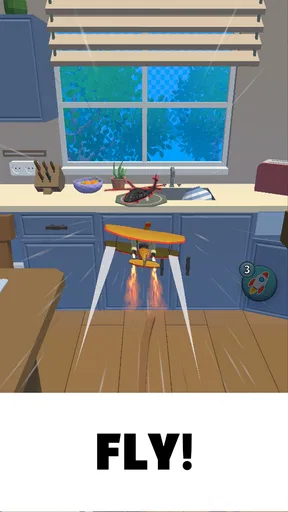
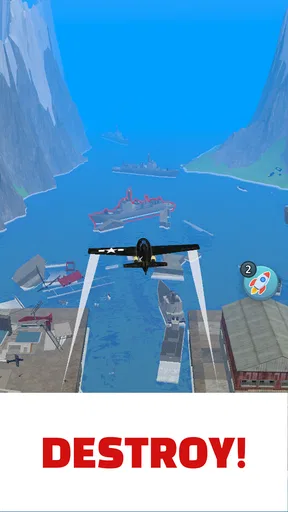
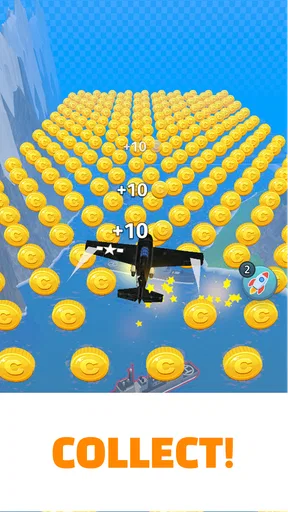
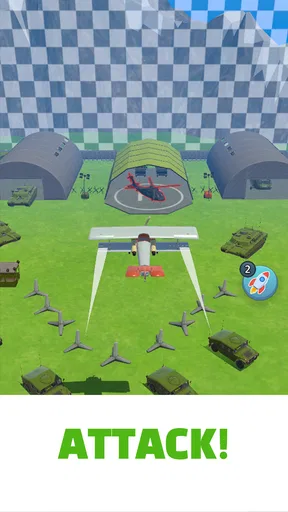
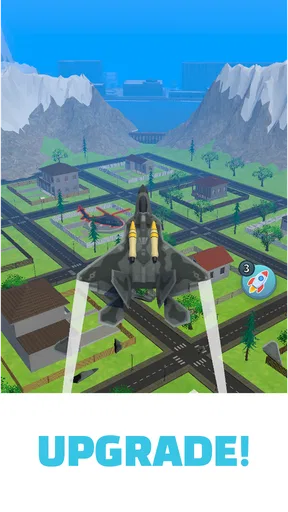
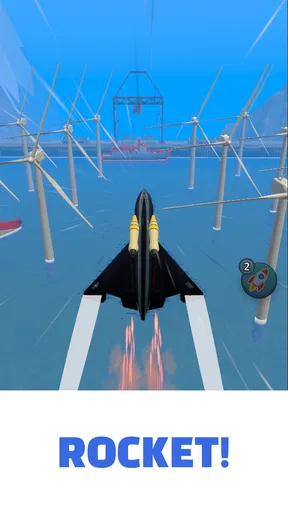
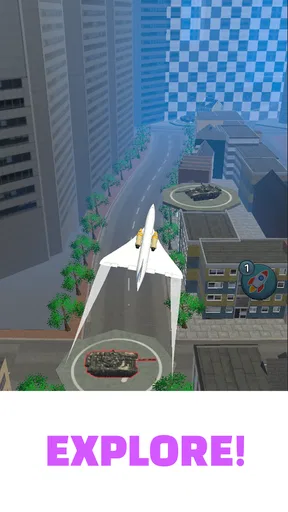
Our Review of Angry Plane Challenge: Evolve
 Analysis by Appyee
I spent time with Angry Plane Challenge: Evolve as a quick arcade game built around flying, bombing targets, and improving a jet between attempts. It is easy to understand at a glance, but its real appeal comes from the short decision loop: steer through danger, choose when to attack, and try to make the next run more effective than the last one. That makes it a natural fit for short breaks rather than a game I would open when I want a long story or a deep simulation.
What stood out most during my sessions was how strongly the game depends on immediate visual information. The plane, hazards, targets, and attack opportunities need to be read quickly, so the experience feels most comfortable when I can give it my full attention. That matters for accessibility as much as it matters for fun. A player who enjoys fast arcade reactions may find the presentation direct and satisfying, while someone who needs slower pacing, larger visual cues, or more time to process movement may find the same design demanding.
How Angry Plane Challenge: Evolve supports different players
I’d use this section to think about fit rather than assume one pace works for everyone: the same jet-upgrade loop can reward players who enjoy quick decisions and those who prefer to learn through careful repetition. I’d also weigh the setting and the player’s comfort with sustained visual attention before recommending a session, then turn to the practical details of readability and navigation.
Readability and navigation during a run
The game communicates its basic idea clearly. I do not need a long explanation to understand that I am controlling a jet and working toward a stronger aircraft. The arcade format helps here: the central action remains focused on movement, bombing, and survival rather than burying the player under menus or a complicated narrative. For a first-time player, that simplicity is useful because the main objective becomes apparent quickly.
Navigation is also helped by the limited scope of the experience. I can think about the current flight instead of learning a large world with many unrelated systems. That is one reason I would recommend trying it to someone who usually avoids complex games but still enjoys quick action. The structure gives the player a clear starting point, a clear activity, and a reason to repeat the attempt through upgrades.
However, simple does not automatically mean easy to read. An arcade flight game asks me to divide attention between the plane’s position, incoming danger, useful targets, and the timing of attacks. When those elements compete for attention, a player with reduced contrast sensitivity, visual fatigue, or slower visual processing may have a harder time than the straightforward premise suggests. I would treat the game’s clarity as strongest at the conceptual level, not necessarily as proof that every moment is visually comfortable.
My practical advice is to begin with short sessions and observe which information causes the most trouble. If the plane is easy to follow but targets disappear into the background, the issue is not understanding the objective; it is the speed and density of the scene. If the controls are clear but the upgrade choices feel rushed, pausing between attempts to read the available options can make the progression easier to manage. This distinction helps identify whether the game suits a player’s needs before investing much time.
The upgrade loop is especially helpful for navigation because it gives each attempt a purpose beyond simply lasting longer. I can use a difficult run as a way to learn what kind of improvement would make the next one more manageable. That turns failure into information, although it does not remove the need for quick reactions. Players who prefer steady, predictable progress may appreciate the sense of direction, while players who dislike repeating challenging sections may find the loop less welcoming.
Motor demands and sensory comfort
The most important physical consideration is the game’s reliance on active control during flight. This is not a passive arcade title where I can make occasional choices and watch the result. I need to respond to what is happening, and the value of a good upgrade depends on whether I can use it effectively while moving through danger. That creates a direct connection between motor precision and success.
For players with limited dexterity, tremor, fatigue, or difficulty holding a device steadily, the fast action may become tiring before the game itself stops being interesting. A player who can manage brief inputs but struggles with sustained control may still enjoy carefully chosen sessions, especially when treating the game as a few attempts rather than an extended play period. I would not recommend assuming that progression alone will solve a control difficulty. A stronger jet can help within the game, but it cannot replace comfortable input.
Touch interaction can also be affected by the way someone holds a phone. Playing with both hands may feel more stable for one person, while another may need one-handed use because of mobility or because the other hand is occupied. In a crowded train, a waiting room, or a kitchen during a short break, that difference becomes practical rather than theoretical. I found the game better suited to moments when I could keep the device steady and look at the screen continuously.
Sensory load is another trade-off. A flying arcade game naturally asks the eyes to track motion, and repeated attempts can become visually intense. Players who are sensitive to movement, flashing effects, or busy scenes should approach it cautiously and stop when the presentation becomes uncomfortable. I would also avoid recommending it as a background activity while listening to something else, because the gameplay depends on visual attention and timing.
Sound can influence how accessible an arcade game feels, but I would not make audio the main reason to choose or reject this one. The essential challenge is visible action and control. That means a player who prefers to keep the phone muted may still understand the basic task, while someone who relies on sound cues should test whether the visual information alone is sufficient for comfortable play. In either case, lowering distractions around the game is more useful than trying to multitask.
A useful approach for motor and sensory comfort is to separate learning from performance. On the first few attempts, I would focus on recognizing the rhythm of movement and identifying what usually causes a failure. On later attempts, I would work on improving one behavior at a time instead of trying to react perfectly to everything. This reduces mental pressure and makes the game more approachable for players who need a slower learning curve, even though the underlying action remains quick.
Situational access in everyday use
This game fits naturally into small pockets of free time. I can imagine opening it while waiting for an appointment, taking a short break from work, or sitting at home when I want something more active than a puzzle but less demanding than a long role-playing game. The premise is compact enough to understand immediately, and the upgrade goal gives a reason to return without requiring me to remember a complicated plot.
That convenience has limits. A short break does not always mean a low-attention break. If I am walking, talking with someone, watching a child, or moving through a busy public space, the game is a poor choice because flying and attacking require concentration. It is better for a seated pause where I can keep the screen in view. Players with attention-related needs may prefer using it at a predictable time, with notifications and nearby distractions reduced, rather than treating it as something to play in the middle of several tasks.
The game is rated for Everyone, which makes its broad audience clear, but an age rating does not describe every player’s comfort with speed or visual pressure. I would feel comfortable suggesting it as a family-friendly arcade option, while still letting each player decide whether the pace suits them. A younger player may understand the objective quickly but need help managing repeated attempts or deciding when an upgrade is worthwhile.
It is free to play, which lowers the barrier to trying it. At the same time, optional purchases range from $0.99 to $29.99 per item, so I would recommend deciding in advance whether spending is part of the experience. A player who wants a completely purchase-free session should be comfortable ignoring the purchase path rather than feeling pressured to improve through payment. Families should also make that choice clear before handing over the device.
The game has reached over 500K installs and carries a 4.6 average from around 2.8K ratings, so it has attracted a substantial audience for this kind of mobile arcade experience. Those figures suggest that the basic concept is resonating with many players, but they do not predict whether its control demands will suit a particular person. I would use the free entry point as the best test: try it in the exact setting where you expect to play it, not only in an ideal quiet room.
Progression, upgrades, and practical decision-making
The upgrade system is the part I would pay closest attention to because it changes how the game feels over time. In a straightforward arcade title, improvement can mean the player is becoming more skilled, the aircraft is becoming more capable, or both. That combination is satisfying when a difficult section becomes manageable, but it can also make it harder to tell whether a failure came from a poor decision or from needing more progression.
I found the most useful mindset was to treat every run as a small experiment. If I repeatedly lose while trying to reach a target, I would not immediately spend resources on whatever looks strongest. I would first ask whether the problem is movement, timing, or insufficient power. That habit is a concrete advantage for players who prefer planning over frantic repetition, and it makes the upgrade loop feel more meaningful than simply choosing the biggest-looking improvement.
Another helpful tactic is to avoid changing too many things at once. When several upgrades are available, improving one weakness at a time makes the result easier to judge. If the next attempt goes better, I have a clearer idea of why. This is particularly useful for players who find layered systems confusing, because it turns progression into a sequence of understandable choices rather than a wall of possibilities.
The trade-off is that players who want a pure test of reflexes may find progression distracting. Someone looking for a minimalist score-chasing game might prefer an arcade alternative with fewer upgrade decisions and a more direct restart loop. By contrast, players who enjoy seeing a vehicle evolve will probably appreciate having a reason to return after a failed flight.
Remaining barriers and who should skip it
The biggest barrier is the absence of any obvious promise of a slower or more adaptable control style. I would not assume that every player can reduce the speed, enlarge important targets, replace rapid gestures, or customize the visual presentation. Because those options are not something I would count on, the game should be approached as an action title with fixed demands unless the current build clearly offers a setting that helps you.
That matters for players with motor disabilities, visual processing difficulties, motion sensitivity, or fatigue. Some may enjoy the game in carefully limited sessions, but others may find that the effort required to keep up overwhelms the fun. A slower arcade game, a turn-based title, or a strategy game with more time between decisions would be a better recommendation when control speed is the main concern.
There is also a cognitive barrier for players who dislike repeated failure. The flight-and-upgrade structure expects experimentation, and improvement may require returning to a challenge after learning from an earlier attempt. If you want a game that lets you progress calmly without frequent pressure, this may not be the right fit. I would skip it for anyone specifically seeking a relaxing, low-stimulation experience.
On the other hand, I would not dismiss it simply because it is fast. Players with limited time, younger family members, and fans of compact arcade sessions may find the focused format easier to approach than a large game with many menus and long objectives. The key question is not whether the game is universally accessible; it is whether its particular combination of movement, bombing, and upgrading matches the player’s abilities and preferred pace.
Version 1.6.2 runs on Android devices using version 6.0 or later, which gives the game a broad technical starting point for compatible users. I would still judge comfort on the actual phone or tablet, since screen size, grip, brightness, and responsiveness can change the experience considerably. Someone who struggles to distinguish small moving objects on a compact display may have a much easier time on a larger screen, while another player may find a large device harder to hold.
My inclusive verdict
After playing it, I see Angry Plane Challenge: Evolve as a focused arcade game with a clear premise and a useful progression hook. Freeplay Inc has kept the central idea easy to grasp: fly, attack, learn from the attempt, and improve the jet. The game is most successful when I have a few uninterrupted minutes and want action that starts quickly without asking me to study a large rulebook.
Its accessibility is more conditional. The simple objective and family-friendly rating make it approachable, but the moment-to-moment experience still depends on visual tracking, timely movement, and sustained attention. I would recommend it to players who enjoy responsive arcade challenges and can comfortably follow a moving scene. I would be more cautious for anyone who needs slower reactions, reduced visual stimulation, alternative input methods, or highly adjustable presentation.
The strongest inclusive tip I can offer is to test the game in realistic conditions: use the device you normally hold, play from the position you normally sit in, and try it when your attention and energy are typical rather than perfect. Notice whether the plane remains easy to follow, whether the controls cause strain, and whether the upgrade choices feel empowering instead of confusing. That short test tells you more than a general accessibility label can.
For me, the game earns its place as a free arcade option because it combines immediate flying action with a reason to keep refining the next attempt. I would choose it over a slower alternative when I want quick decisions and visible progress. I would choose something calmer when I need low sensory demand or when my hands and eyes are already tired. Its best quality is focused replayability, while its main limitation is that the same speed that creates excitement can narrow who can play comfortably.
With a 4.6 average and a growing audience, it is clearly worth a trial for the right player, and the free price makes that trial straightforward. Just do not confuse popularity or a welcoming age rating with a guarantee of comfortable access for everyone. If you enjoy compact jet-based arcade action and are happy to learn through repeated flights, I think you will find a satisfying challenge here. If you need extensive control and sensory customization, I would look elsewhere first.
Privacy and Permissions
See what permissions an app requests and how it handles your data.
- Photos/Media/Files
- read the contents of your USB storage
- Storage
- read the contents of your USB storage
- Wi-Fi connection information
- view Wi-Fi connections
- Other
- view network connections, full network access, control vibration, prevent device from sleeping, Google Play license check
Verdict
Strengths of Angry Plane Challenge: Evolve
- Simple controls make it easy to start playing immediately.
- Short challenge rounds are ideal for quick gaming sessions.
- Progression system encourages repeated play and improvement.
- Runs smoothly on many modern Android and iOS devices.
- Bright visuals make obstacles and targets easy to recognize.
Limitations of Angry Plane Challenge: Evolve
- Later challenges can feel repetitive after extended play.
- Precision flying may be frustrating on smaller screens.
- Some upgrades may require considerable time to unlock.
- The game can become difficult before controls feel fully mastered.
- Frequent retries may feel monotonous for casual players.
Other Releases by Freeplay Inc
View All
Snake Run Race・3D Running Game
Arcade4.7

Fidget Toys Trading・Pop It 3D
Simulation4.7

Count Masters: Stickman Games
Action4.6

Twerk Race 3d — Fun run game!
Arcade4.2
Similar Picks in This Category
View All
Subway Surfers
SYBO Games4.6

Stickman Party 234 MiniGames
PlayMax Game Studio4.6

Subway Princess Runner
Ivy4.4

Temple Run
Imangi Studios4.2

Zombie Tsunami
Mobigame SAS4.6

Stack Ball - Crash Platforms
CASUAL AZUR GAMES4.5
Frequently Asked Questions
What is Angry Plane Challenge: Evolve?
Angry Plane Challenge: Evolve is an arcade-style flying game focused on controlling a plane through challenging environments while avoiding obstacles and completing objectives. Its progression system encourages you to keep playing, improve your performance, and potentially unlock or evolve aircraft-related abilities. The game is designed for short, action-packed sessions and is suitable for players who enjoy simple controls combined with increasingly difficult challenges.
How do you play Angry Plane Challenge: Evolve?
Gameplay generally revolves around guiding your aircraft, reacting quickly to hazards, and maintaining control as the challenge becomes more demanding. Depending on the stage, you may need to collect items, avoid collisions, reach targets, or survive for a specific amount of time. The controls are intended to be accessible, but success still requires timing, concentration, and practice, especially when obstacles appear more frequently.
Is Angry Plane Challenge: Evolve free to download and play?
Angry Plane Challenge: Evolve may be available as a free download, allowing players to try the main gameplay without paying upfront. However, free games can include advertisements, optional purchases, or other monetization features. Before installing, check the official Google Play Store or Apple App Store listing for the current pricing, in-app purchase details, supported devices, and any age or regional restrictions that may apply.
Does Angry Plane Challenge: Evolve require an internet connection?
The internet requirements can depend on the version and features included in the app. Basic gameplay may work offline if the game stores its levels and progress locally, while advertisements, updates, leaderboards, cloud saving, or verification may require a connection. If offline access is important to you, review the store description and test the game after installation with Wi-Fi and mobile data disabled.
Is Angry Plane Challenge: Evolve suitable for children?
Angry Plane Challenge: Evolve can be appropriate for players who enjoy fast arcade challenges, but parents should check its official age rating before allowing children to download it. It is also worth reviewing whether the game contains advertisements, in-app purchases, online features, or external links. Younger players may need supervision because repeated attempts, timed challenges, or optional purchases can encourage longer play sessions.
Play our best games!


